
Singapore has become one of the most sophisticated regulatory environments for digital assets in Asia. The Payment Services Act now governs how cryptocurrency exchanges, wallet providers, and token issuers operate within and from the city-state.
If you’re running a digital asset business or planning to launch one in Singapore, understanding the Payment Services Act isn’t optional anymore. The Monetary Authority of Singapore has expanded its reach, tightened user protection requirements, and introduced clearer licensing pathways that directly impact how you handle customer funds, conduct transactions, and report suspicious activity.
Singapore’s Payment Services Act requires digital payment token service providers to obtain licenses from MAS, implement robust AML/CFT controls, maintain capital adequacy, segregate customer assets, and comply with user protection standards. Recent amendments expand territorial scope, introduce stablecoin frameworks, and impose stricter obligations on cross-border operators. Non-compliance can result in license revocation, fines, and operational shutdowns.
What the Payment Services Act covers for digital asset operators
The Payment Services Act came into force in January 2020. It replaced the previous Payment Systems Oversight Act and Money-changing and Remittance Businesses Act with a unified framework.
Digital payment token services fall under one of seven regulated payment services. A digital payment token is defined as any digital representation of value that can be transferred, stored, or traded electronically. This includes cryptocurrencies like Bitcoin and Ethereum, but excludes representations of fiat currency and securities tokens.
If your business buys, sells, exchanges, or facilitates the exchange of digital payment tokens, you need a license. If you operate a platform that allows users to transfer tokens between wallets, you’re also in scope. Even if you’re incorporated overseas but actively market to Singapore residents, MAS considers you within its jurisdiction.
The Act distinguishes between standard payment institutions and major payment institutions based on transaction volumes and float thresholds. Digital payment token service providers typically fall into the major payment institution category, which carries heavier compliance obligations.
Licensing requirements you need to satisfy
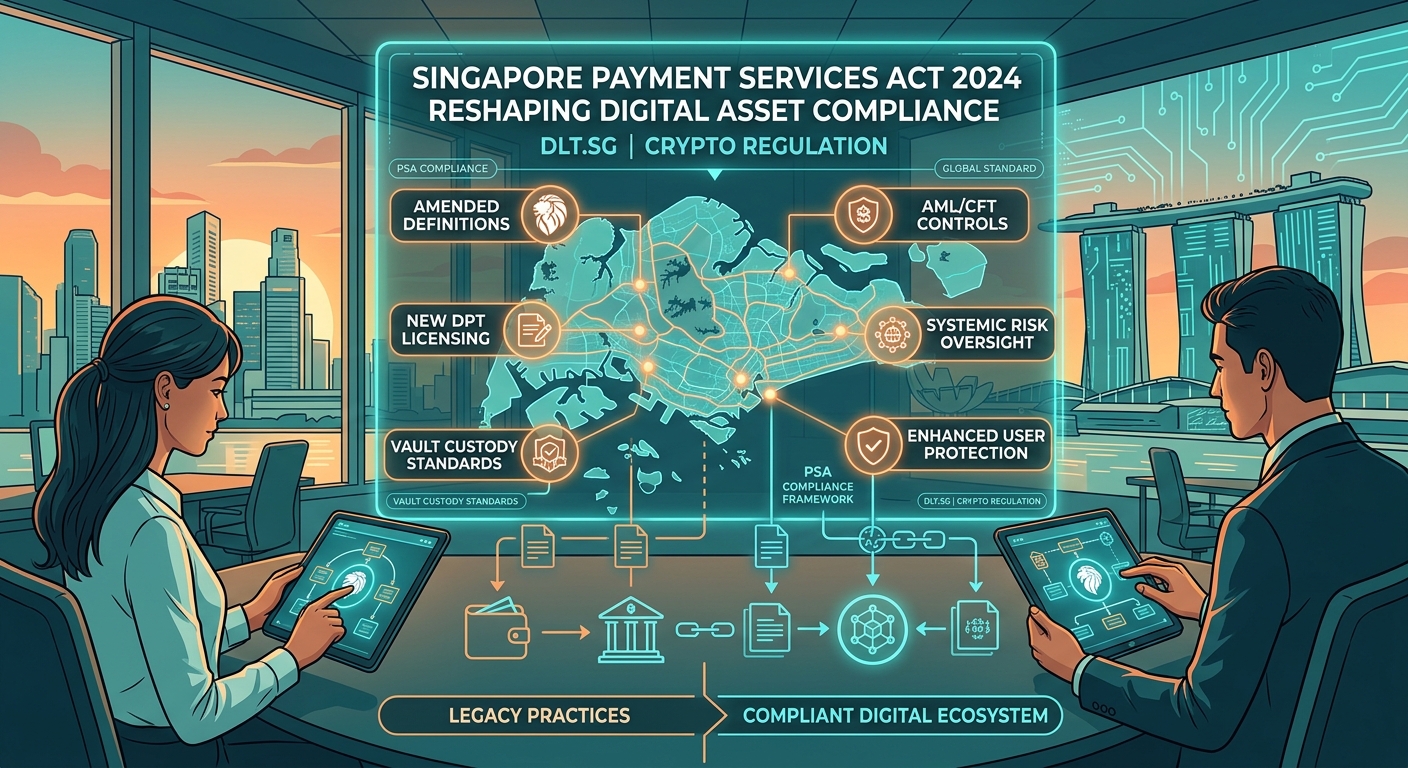
Getting a license from MAS involves meeting several core criteria. The authority evaluates your application based on fit and proper standards, operational capabilities, and risk management frameworks.
Here’s what you need to demonstrate:
-
Corporate structure and governance. Your directors, substantial shareholders, and key executives must pass fit and proper assessments. MAS looks at criminal records, regulatory history, financial soundness, and competence. If you have parent companies or related entities, their backgrounds matter too.
-
Physical presence in Singapore. You must establish a registered office and maintain key management functions locally. MAS expects your chief compliance officer and at least one executive director to be based in Singapore.
-
Capital adequacy. Major payment institutions handling digital payment tokens need a base capital of SGD 250,000 or higher depending on transaction volumes. You also need to maintain operational funds sufficient to cover six months of operating expenses.
-
Technology and cybersecurity controls. Your systems must protect customer data, prevent unauthorized access, and ensure business continuity. MAS requires regular penetration testing, incident response plans, and secure key management for cryptographic operations.
-
AML/CFT compliance programs. You need robust customer due diligence procedures, transaction monitoring systems, and suspicious transaction reporting mechanisms. MAS Notice PSN02 sets out specific requirements for digital payment token services, including enhanced due diligence for high-risk customers and jurisdictions.
-
Segregation of customer assets. Customer funds and tokens must be kept separate from your operational assets. You need custodial arrangements that protect customer holdings even if your business fails.
-
Business continuity and disaster recovery. Your operations must withstand disruptions. MAS expects documented plans, regular testing, and backup systems that can restore services within acceptable timeframes.
The application process typically takes six to twelve months. MAS reviews your policies, conducts interviews, and may request additional documentation or clarifications throughout.
Recent regulatory changes reshaping compliance obligations
MAS has been actively refining the Payment Services Act since its introduction. Several significant updates have taken effect or are coming soon.
In July 2023, MAS published a consultation on user protection and financial stability requirements for digital payment token service providers. The resulting amendments took effect in phases throughout 2024.
Key changes include:
-
Restrictions on retail lending and credit. Licensed providers cannot offer margin trading, lending, or staking services that involve credit extension to retail customers. This addresses concerns about leverage-related losses.
-
Disclosure requirements for token listings. Before listing a new token, you must conduct due diligence on the token issuer, assess technical risks, and disclose material information to users. MAS wants customers to understand what they’re buying.
-
Conflict of interest management. If you issue your own tokens or have financial interests in listed tokens, you must disclose these relationships and implement controls to prevent unfair treatment of customers.
-
Expanded territorial scope. The amendments clarify that overseas entities actively soliciting Singapore customers fall under MAS jurisdiction. If you target Singaporeans through localized marketing, customer support, or payment methods, you’re expected to hold a license.
MAS also introduced a stablecoin regulatory framework in August 2023. Stablecoin issuers must meet reserve requirements, provide redemption rights at par value, and disclose reserve composition monthly. This framework applies to single-currency stablecoins pegged to the Singapore dollar or G10 currencies.
The authority continues to work on cross-border payment standards through initiatives like Project Orchid and collaboration with other jurisdictions on travel rule implementation.
Common compliance mistakes that trigger MAS scrutiny
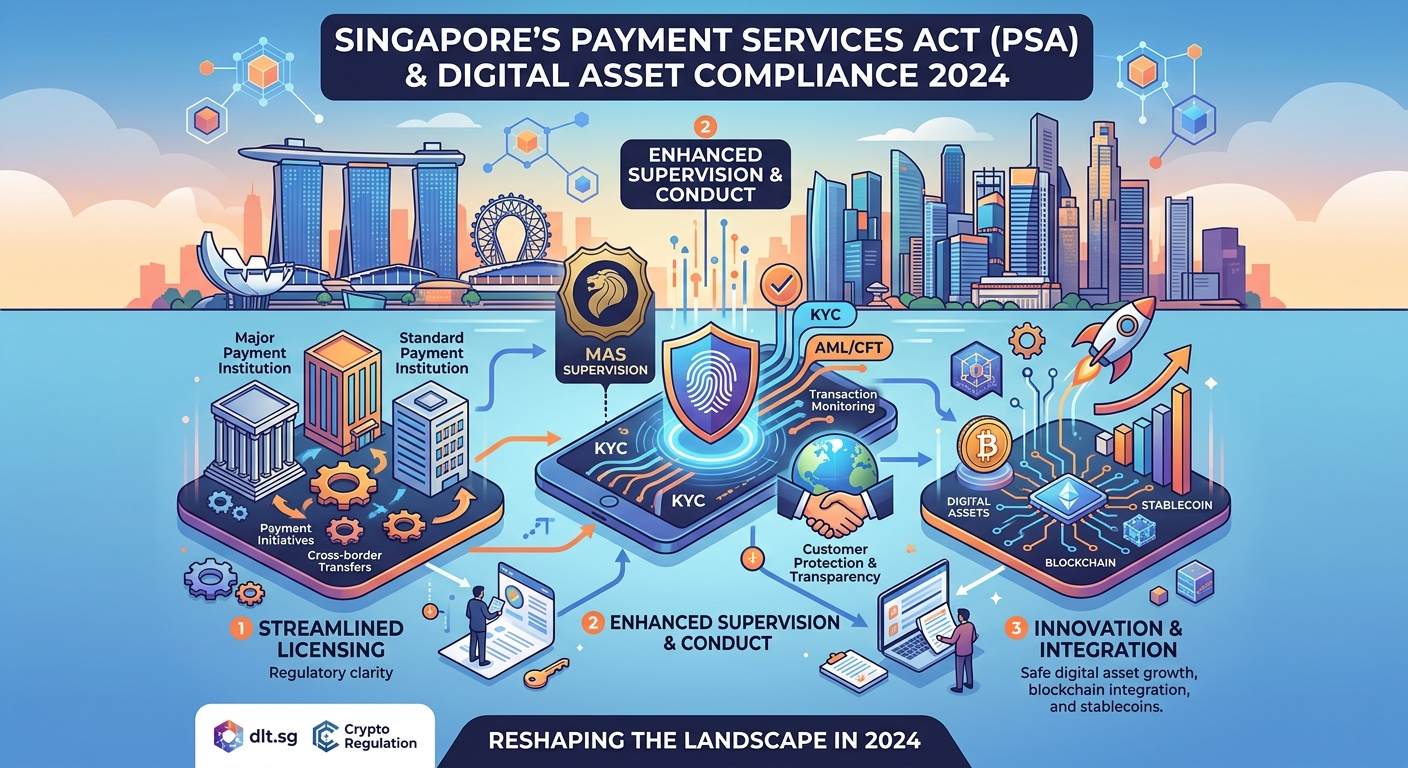
Even licensed providers face enforcement actions when they fail to meet ongoing obligations. MAS publishes enforcement notices that reveal common pitfalls.
Here are frequent mistakes:
-
Inadequate customer due diligence. Accepting customers without proper identity verification, failing to understand source of funds, or not updating customer information regularly. MAS expects continuous monitoring, not just onboarding checks.
-
Weak transaction monitoring. Using overly broad thresholds that miss suspicious patterns, failing to investigate alerts promptly, or not filing suspicious transaction reports when required. Your systems need to detect structuring, layering, and other red flags.
-
Poor segregation practices. Commingling customer assets with company funds, using customer deposits for operational expenses, or failing to reconcile custodial holdings daily. MAS has zero tolerance for misuse of customer assets.
-
Insufficient cybersecurity controls. Storing private keys on internet-connected systems, failing to implement multi-signature wallets, or not conducting regular security audits. Several exchanges have faced enforcement for inadequate key management.
-
Incomplete record keeping. Not maintaining transaction records for at least five years, failing to document compliance decisions, or losing audit trails during system migrations. MAS expects complete, accessible records.
-
Unauthorized changes to business models. Launching new products or services without notifying MAS, expanding into new jurisdictions without approval, or making significant changes to ownership structure without prior consent.
The table below shows common violations and their typical consequences:
| Violation Type | Typical Consequence | Remediation Period |
|---|---|---|
| AML/CFT control failures | Restriction on new customers, enhanced reporting | 3 to 6 months |
| Asset segregation breaches | Suspension of services, capital injection requirement | Immediate |
| Cybersecurity incidents | Mandatory audit, system upgrade directives | 1 to 3 months |
| Unauthorized activities | License conditions, business restrictions | Varies |
| Repeated minor breaches | Financial penalties, public reprimands | Ongoing monitoring |
Practical steps to build a compliant operation
Building compliance into your operations from day one saves time and reduces risk. Here’s a step-by-step approach:
-
Conduct a regulatory gap analysis. Compare your current operations against MAS requirements. Identify missing policies, inadequate controls, and areas where you need external expertise. Document everything.
-
Hire experienced compliance personnel. Your compliance officer should have financial services experience and understand both traditional AML/CFT requirements and digital asset-specific risks. Consider hiring someone who has worked with licensed providers or regulatory bodies.
-
Implement a compliance management system. Use software that tracks regulatory obligations, manages policy updates, and generates audit trails. Manual spreadsheets don’t scale as your business grows.
-
Establish clear policies and procedures. Document how you onboard customers, monitor transactions, report suspicious activity, manage keys, segregate assets, and handle incidents. Train your team on these procedures regularly.
-
Build relationships with service providers. You’ll need banking partners, custodians, auditors, and legal advisors who understand digital assets. Singapore has a growing ecosystem of service providers familiar with MAS requirements.
-
Set up robust monitoring systems. Deploy transaction monitoring tools that flag unusual patterns, implement wallet screening against sanctions lists, and create dashboards that give compliance teams real-time visibility.
-
Test your controls regularly. Conduct internal audits, run penetration tests, and simulate incident scenarios. Fix weaknesses before MAS finds them during inspections.
-
Stay informed about regulatory developments. MAS publishes consultation papers, guidelines updates, and enforcement notices regularly. Subscribe to their updates and participate in industry consultations when appropriate.
Your compliance program should evolve with your business. What works for a small exchange with 1,000 users won’t suffice when you’re handling 100,000 customers and processing millions in daily volume. Build scalability into your systems from the start.
How MAS enforces the Payment Services Act
MAS uses a range of enforcement tools depending on the severity and nature of violations. Understanding how enforcement works helps you appreciate the stakes.
The authority conducts regular inspections of licensed providers. These can be scheduled annual reviews or surprise visits triggered by customer complaints, suspicious activity reports from other institutions, or intelligence from international partners.
During inspections, MAS reviews your policies, samples transactions, interviews staff, and tests your systems. They look for gaps between documented procedures and actual practices.
If MAS finds issues, they typically issue directives requiring remediation within specified timeframes. For serious breaches, they can:
- Impose restrictions on your license, such as prohibiting new customer onboarding
- Require additional capital injections or insurance coverage
- Appoint independent auditors to oversee remediation
- Publish public reprimands that damage your reputation
- Levy financial penalties up to SGD 1 million per violation
- Revoke your license and order you to cease operations
Several high-profile cases illustrate MAS’s willingness to act. In 2023, the authority investigated and eventually shut down a platform that failed to implement adequate AML controls. The platform had allowed customers to trade without proper identity verification and didn’t monitor transactions for suspicious patterns.
Another provider faced restrictions after a cybersecurity incident exposed customer data. MAS required the company to engage external security experts, upgrade its infrastructure, and submit to enhanced monitoring for two years.
The lesson is clear. MAS expects continuous compliance, not just passing the initial licensing hurdle. How Singapore’s Monetary Authority is Shaping Southeast Asia’s Digital Asset Future provides additional context on the regulator’s broader strategy.
Technology requirements and operational standards
Your technology stack needs to meet specific standards under the Payment Services Act. MAS doesn’t prescribe particular technologies, but they expect you to achieve certain outcomes.
Key technical requirements include:
-
Secure key management. Private keys controlling customer assets must be stored in hardware security modules or equivalent secure environments. Multi-signature schemes should protect high-value wallets. Key generation, storage, and usage must follow industry best practices.
-
Access controls. Implement role-based access controls that limit system access to authorized personnel only. Privileged access should require multi-factor authentication and generate audit logs.
-
Data protection. Customer data must be encrypted at rest and in transit. Personal information should be stored in Singapore or jurisdictions with adequate data protection laws. You need clear data retention and deletion policies.
-
Business continuity systems. Maintain backup systems that can restore operations within recovery time objectives appropriate to your service. Test your disaster recovery plans at least annually.
-
Transaction processing integrity. Your systems must accurately record all transactions, prevent double-spending, and maintain complete audit trails. Reconciliation processes should catch discrepancies immediately.
-
API security. If you provide APIs for customers or partners, implement rate limiting, input validation, and authentication mechanisms that prevent abuse.
Many operators find it helpful to reference established frameworks like ISO 27001 for information security or NIST guidelines for cybersecurity. While MAS doesn’t require specific certifications, demonstrating alignment with recognized standards strengthens your application and inspection readiness.
Understanding how distributed ledgers actually work helps your technical team build systems that align with the underlying technology’s capabilities and limitations.
Navigating the licensing application process
Applying for a Payment Services Act license requires careful preparation. Here’s what the process typically looks like:
Phase 1: Pre-application preparation (2 to 3 months)
Assemble your documentation, finalize your corporate structure, and ensure all key personnel are in place. MAS offers pre-application consultations where you can clarify requirements and discuss your business model. Use this opportunity to address potential concerns early.
Phase 2: Formal application submission (1 month)
Submit your application through MAS’s online portal. You’ll need to provide corporate documents, business plans, financial projections, compliance manuals, technology architecture descriptions, and background information on key personnel.
Phase 3: MAS review and queries (3 to 6 months)
MAS reviews your application and typically issues multiple rounds of questions. Response times matter. Delays in providing information extend the overall timeline. Be prepared for detailed questions about your AML controls, technology security, and financial sustainability.
Phase 4: In-principle approval (conditional license)
If MAS is satisfied with your application, they grant in-principle approval. This allows you to finalize operational setup, complete system testing, and prepare for launch. You can’t conduct regulated activities yet, but you can onboard staff and build infrastructure.
Phase 5: Final approval and license issuance (1 to 2 months)
Once you demonstrate that all conditions are met, MAS issues your full license. You can now commence regulated activities. MAS typically conducts an initial inspection within the first year to verify ongoing compliance.
The entire process usually takes nine to twelve months for well-prepared applicants. Incomplete applications or significant concerns can extend this to eighteen months or more.
What happens if you operate without a license
Operating digital payment token services without a license is a criminal offense under the Payment Services Act. MAS actively monitors the market for unlicensed operators.
Penalties include:
- Fines up to SGD 125,000
- Imprisonment up to three years
- Both fine and imprisonment
MAS also issues public warnings about unlicensed operators, which damages reputation and makes it difficult to obtain banking services or partnerships.
If you’re currently operating without a license, you have limited options. You can apply for a license and cease regulated activities until approval, or you can exit the Singapore market entirely. Continuing to operate while applying doesn’t protect you from enforcement.
Some operators mistakenly believe they can avoid licensing by incorporating overseas and simply accepting Singapore customers. The territorial scope amendments closed this loophole. If you actively solicit Singapore customers, MAS considers you subject to the Act regardless of where you’re incorporated.
Ongoing compliance obligations after licensing
Getting your license is just the beginning. Licensed providers face continuous obligations:
-
Annual audits. Submit audited financial statements and compliance reports to MAS annually. Your auditor must be approved by MAS and familiar with payment services regulations.
-
Regular reporting. File quarterly business updates, monthly statistical returns, and immediate incident reports for significant events like security breaches or service disruptions.
-
Policy updates. Review and update your compliance policies at least annually or whenever regulations change. Submit material policy changes to MAS for review.
-
Staff training. Conduct regular training for all staff on AML/CFT obligations, cybersecurity practices, and customer protection requirements. Document training completion.
-
Change notifications. Inform MAS about changes to directors, substantial shareholders, business models, or corporate structure. Some changes require prior approval.
-
Customer complaint handling. Maintain a complaint resolution process and report complaint statistics to MAS quarterly. Serious complaints may trigger inspections.
Budget for ongoing compliance costs. Most licensed providers spend 15 to 25 percent of their operating budget on compliance-related activities, including personnel, systems, audits, and professional advisors.
How the regulatory landscape is evolving
Singapore’s digital asset regulatory framework continues to mature. Several developments are worth watching:
Stablecoin regulations. The framework introduced in 2023 is being refined based on industry feedback. MAS is considering whether to expand coverage to algorithmic stablecoins and how to handle stablecoins backed by multiple currencies.
Retail access restrictions. There’s ongoing debate about whether retail investors should have unrestricted access to all digital assets or whether certain high-risk products should be limited to accredited investors. MAS has historically favored disclosure over restriction, but this may evolve.
Cross-border coordination. Singapore is working with other jurisdictions on harmonized standards for travel rule implementation, licensing reciprocity, and information sharing. This could simplify operations for multi-jurisdiction providers.
Decentralized finance protocols. MAS is studying how to apply existing regulations to DeFi protocols that lack centralized operators. This remains an open question globally, and Singapore’s approach will influence regional standards.
Central bank digital currency integration. Project Orchid and related initiatives are exploring how a Singapore dollar CBDC would interact with private stablecoins and digital asset markets. This could create new opportunities and requirements for licensed providers.
Staying ahead of these developments gives you a competitive advantage. Participate in industry associations, respond to MAS consultations, and build relationships with the regulator to understand where policy is heading.
Building compliance into your business model
The most successful digital asset businesses in Singapore treat compliance as a competitive advantage, not a burden. Here’s how:
Design products with compliance in mind. Before launching new features, assess regulatory implications. Products that create compliance headaches often aren’t worth the revenue they generate.
Invest in compliance technology. Automated monitoring, smart contract auditing tools, and compliance management platforms reduce manual work and improve accuracy. The upfront cost pays off through lower operational expenses and reduced regulatory risk.
Build a compliance culture. When everyone from developers to customer service representatives understands compliance obligations, you catch issues earlier and respond faster. Make compliance part of performance evaluations and compensation structures.
Engage with regulators proactively. Don’t wait for inspections to communicate with MAS. Regular dialogue helps you understand expectations, clarify ambiguous requirements, and demonstrate your commitment to compliance.
Learn from industry incidents. When other providers face enforcement actions, analyze what went wrong and assess whether you have similar vulnerabilities. Proactive remediation is cheaper than reactive fixes.
Companies that view enterprise blockchain governance as foundational to their operations tend to build more robust compliance frameworks from the start.
Resources and support for compliance implementation
You don’t have to build your compliance program alone. Singapore has a robust ecosystem of service providers and resources:
-
Legal firms. Several Singapore law firms specialize in fintech and digital asset regulations. They can help with license applications, policy drafting, and regulatory interpretation.
-
Compliance consultants. Specialized consultants offer gap analyses, policy development, and interim compliance officer services. This is particularly useful if you’re not ready to hire full-time compliance staff.
-
Technology vendors. Multiple companies provide transaction monitoring, KYC/AML screening, and compliance management software tailored to digital asset businesses.
-
Industry associations. The Singapore Fintech Association and Blockchain Association Singapore offer networking, education, and advocacy. They often coordinate industry responses to regulatory consultations.
-
Professional training. Organizations like the Association of Certified Anti-Money Laundering Specialists offer courses specific to digital asset AML compliance.
-
MAS resources. The authority publishes detailed guidelines, FAQs, and consultation papers. Their website includes application forms, reporting templates, and contact information for regulatory queries.
Building relationships with experienced service providers early in your licensing journey saves time and reduces costly mistakes.
Why Singapore’s approach matters for the region
Singapore’s Payment Services Act serves as a model for other Southeast Asian jurisdictions developing digital asset regulations. Thailand, Malaysia, and the Philippines have all referenced Singapore’s framework when crafting their own rules.
This creates both opportunities and challenges. If you build compliance capabilities for Singapore, you’re better positioned to expand regionally. The fundamental principles around AML/CFT, customer protection, and operational resilience apply across jurisdictions, even if specific requirements vary.
At the same time, each market has unique characteristics. Singapore’s sophisticated financial infrastructure, strong rule of law, and tech-savvy population create a different operating environment than emerging markets with less developed banking systems and different risk profiles.
Understanding what Singapore banks are actually doing with blockchain technology provides insight into how traditional finance and digital assets are converging in the region.
Making compliance work for your business
The Payment Services Act creates a clear regulatory framework that, while demanding, provides certainty for digital asset businesses. You know what’s expected, what happens if you fall short, and how to demonstrate compliance.
This clarity attracts institutional investors, banking partners, and enterprise customers who won’t work with unregulated operators. Your license becomes a business asset that differentiates you from offshore competitors operating in regulatory gray zones.
The key is approaching compliance strategically. Build it into your operations from the start, invest in the right people and systems, and maintain open communication with MAS. The providers that thrive in Singapore’s market are those that view regulatory excellence as core to their value proposition.
Whether you’re launching a new exchange, expanding an existing business into Singapore, or repositioning to meet new requirements, the Payment Services Act provides a roadmap. Follow it carefully, seek expert guidance when needed, and build a compliance program that scales with your ambitions.
Singapore’s digital asset ecosystem continues to mature, and the regulatory framework evolves alongside it. Businesses that stay informed, adapt proactively, and maintain high compliance standards will be best positioned to capture opportunities in Southeast Asia’s growing Web3 economy.